Every fabrication shop eventually asks the same question: should this joint be welded by hand, or should it be automated? It’s not a trivial decision. The wrong choice can mean paying for equipment you didn’t need, or worse, sinking hours into manual rework on parts that should have been consistent from the first pass. This guide breaks down orbital welding vs. manual welding across the factors that actually matter: quality, speed, cost, and skill requirements, so you can make the call with confidence.
Quick Comparison
| Factor | Manual Welding | Orbital Welding |
| Weld Consistency | Varies by welder skill & fatigue | Identical every pass, fully programmed |
| Best For | One-offs, repairs, unusual geometry | Repeatable, high-volume pipe & tube joints |
| Upfront Cost | Lower, torch & power supply only | Higher, full system investment |
| Cost Per Weld (at volume) | Rises with rework & labor hours | Drops significantly at scale |
| Skill Requirement | Years of hand-eye training | Shorter learning curve, setup & programming |
| Speed (repeat joints) | Slower, resets each pass | Faster, no repositioning needed |
What’s the Real Difference?
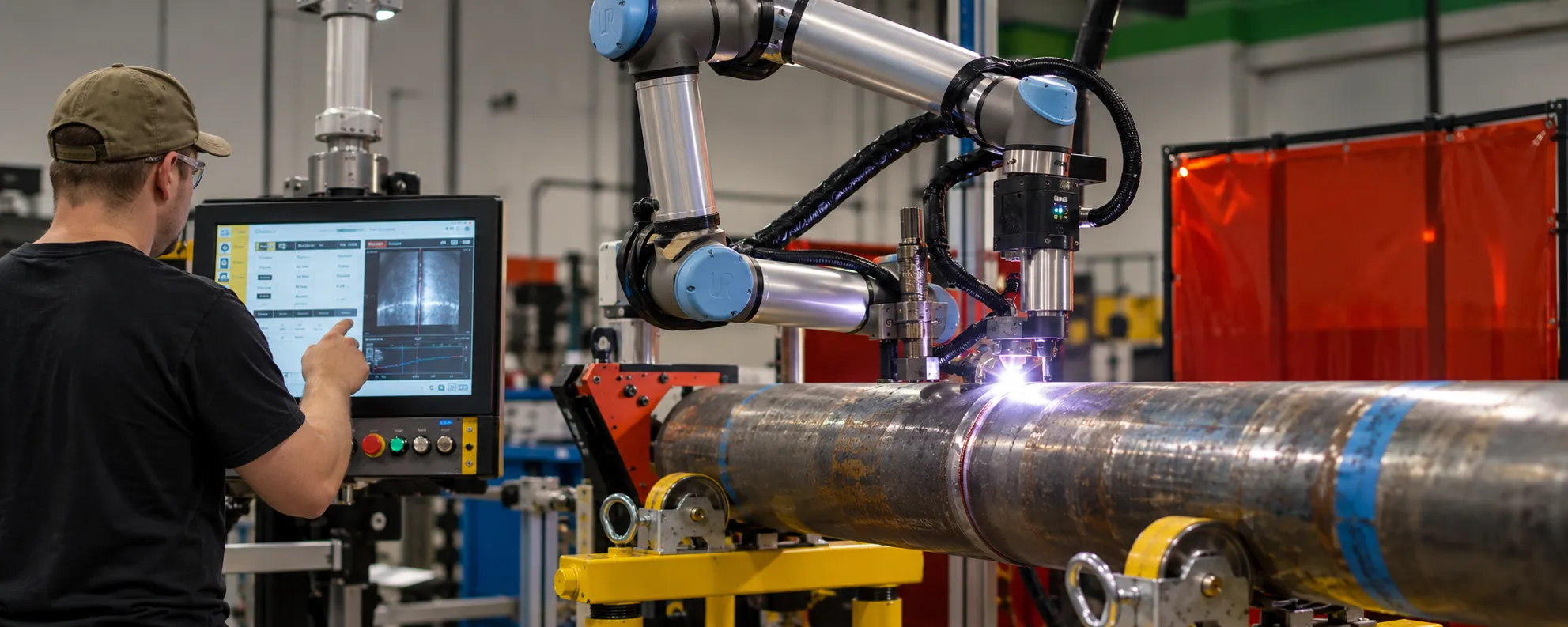
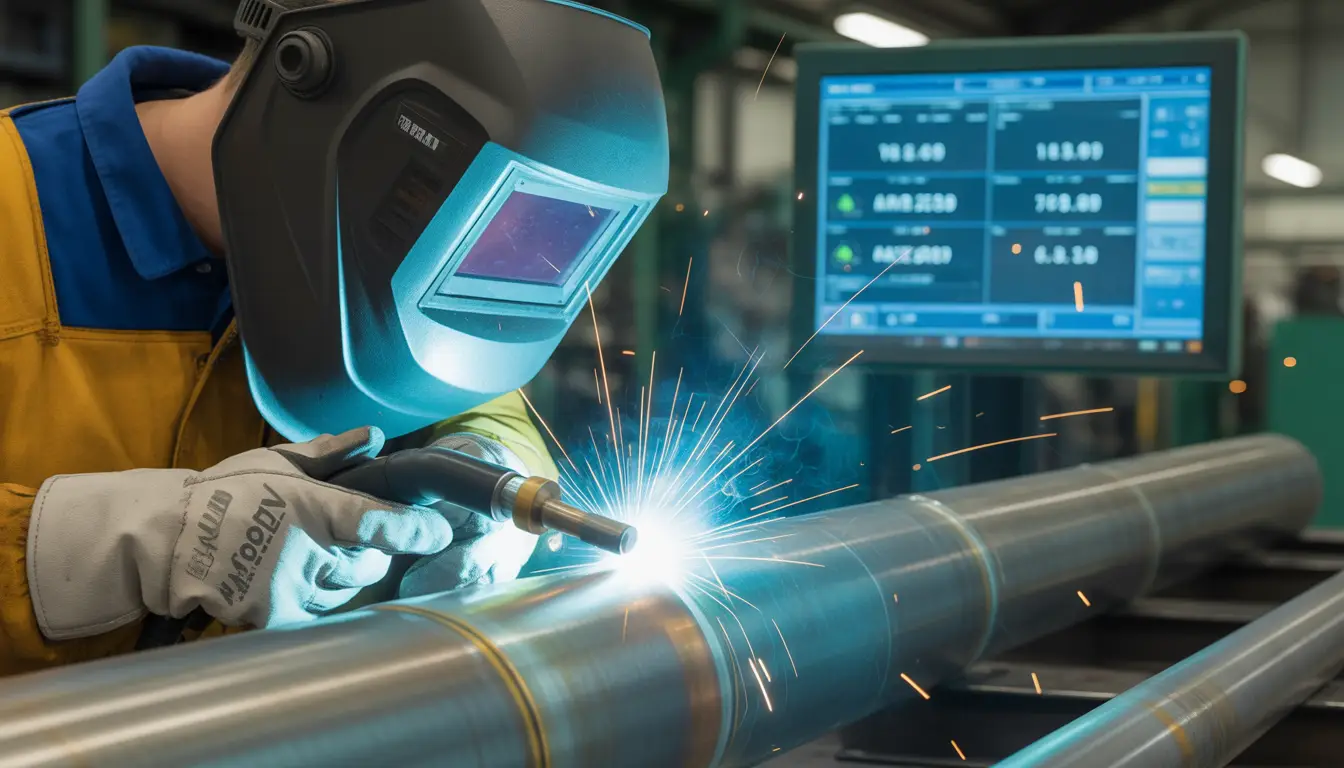
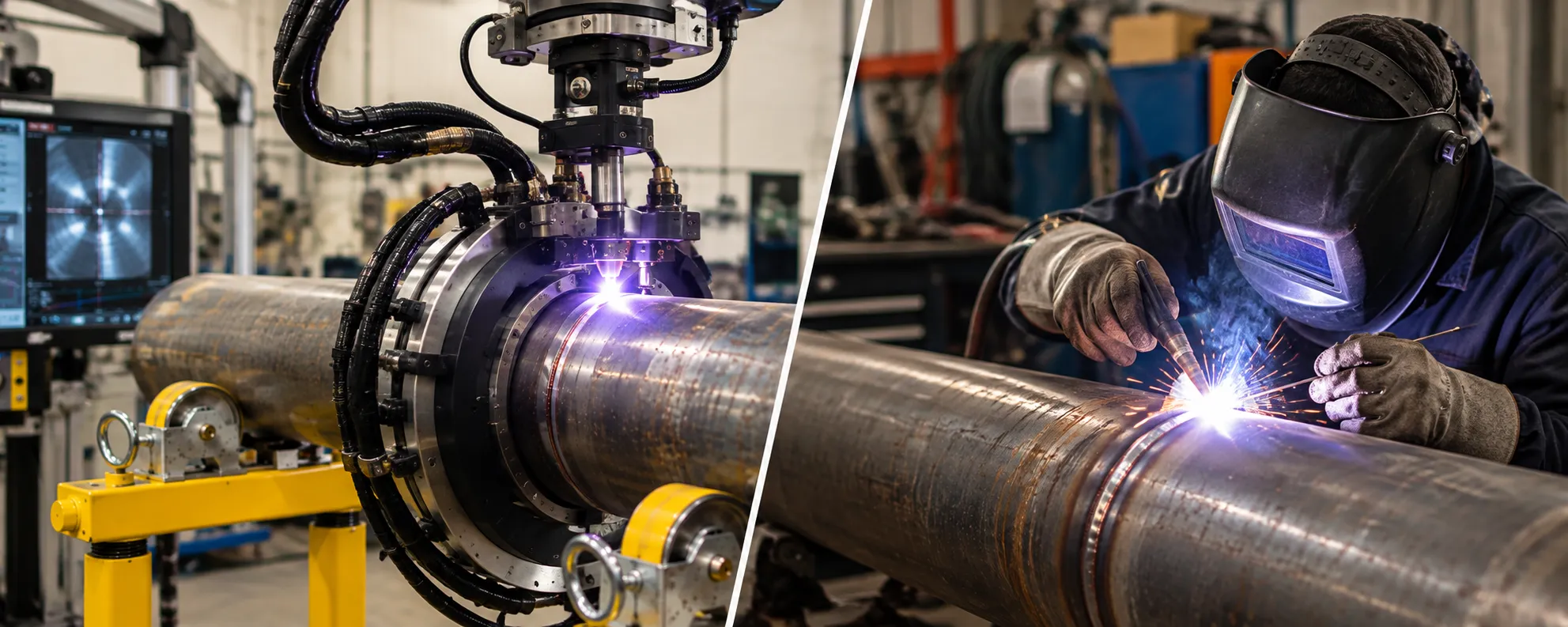
Manual welding puts a torch in a welder’s hand and relies entirely on their skill, eyesight, and steadiness to produce a good bead. Orbital welding replaces the human hand with a motorized weld head that rotates the electrode around the pipe automatically, guided by a programmed power supply that controls current, speed, and arc length throughout the weld. Both processes can use the same core technology, gas tungsten arc welding, but the execution is fundamentally different.
Weld Quality and Consistency
This is where orbital welding earns most of its reputation. A skilled manual welder can absolutely produce an excellent weld, but can they produce the exact same weld on the 50th joint of a 10-hour shift as they did on the first? Fatigue, awkward positioning, and simple human variability all creep in over time.
Orbital welding doesn’t have that problem. Once a weld program is set and tested, every subsequent joint runs the identical parameters: same travel speed, same current profile, and same arc length adjustments as gravity shifts around the pipe. For industries where a single bad weld can mean a failed inspection, a shut-down pipeline, or a recalled medical device, that repeatability isn’t a bonus feature. It’s the reason orbital welding exists.
Speed and Throughput
For a single, one-off weld, manual welding is often faster. There’s no setup time, no programming, no clamping a weld head in place. But that advantage disappears quickly once you’re welding the same joint repeatedly. An orbital system that takes ten minutes to set up on the first joint can then run that exact program across dozens or hundreds of identical joints without needing to reposition or re-strike the arc between passes.
This is why orbital welding shows up so heavily in production environments, spool fabrication shops, pipeline projects, and OEM manufacturing lines, where the same joint gets welded over and over. The math simply favors automation once volume climbs past a certain threshold.
Cost Comparison
Manual welding wins on upfront cost. A TIG torch and power supply is a much smaller investment than a full orbital system with a weld head, cooling unit, and programmable power supply. That’s a real consideration for low-volume shops or one-off projects.
But total cost of ownership tells a different story once you factor in rework, inspection failures, and labor hours. A shop welding the same joint hundreds of times a year often recovers the cost of an orbital system within the first year simply by cutting rework and reducing the hours needed per joint. It’s the same logic behind any automation investment: the upfront number looks bigger, but the cost per unit drops fast at volume.
Skill Requirements and Labor
Manual welding depends on finding and retaining genuinely skilled welders, and that’s gotten harder every year as experienced welders retire faster than new ones are trained. A great manual welder takes years to develop, and their output still varies with fatigue, mood, and working conditions.
Orbital welding shifts the skill requirement. Instead of needing a welder with years of hand-eye coordination training, you need an operator who can properly prep the joint, clamp the weld head, and select or program the right parameters. That’s a meaningfully shorter learning curve, and it’s one of the biggest reasons shops facing labor shortages are turning to automated welding to keep production moving without sacrificing quality.
When Manual Welding Still Makes Sense
None of this means manual welding is obsolete. It’s still the right call for:
• One-off repairs or field service where setting up an orbital system isn’t practical
• Unusual joint geometries that don’t fit standard weld head configurations
• Very low production volumes where the equipment investment wouldn’t be recovered
• Tight or obstructed access where a weld head physically can’t reach the joint
When Orbital Welding Is the Better Choice
On the other side, orbital welding is almost always the better investment when:
• Repeat production, you’re welding the same pipe diameter and material repeatedly
• Certification requirements, weld quality must meet strict code or regulatory standards
• Labor shortages, you’re facing a shortage of experienced manual welders
• Margin pressure, rework and inspection failures are eating into your margins
Making the Right Call for Your Shop
The honest answer for most shops is that it isn’t an either-or decision. It’s about knowing which jobs deserve automation and which don’t. Many of the fabricators we work with keep skilled manual welders on staff for repairs and specialty work while running their high-volume, repeat production through orbital systems like our M3 pipe spool welder. That combination gets the best of both worlds: flexibility where it’s needed, and repeatable quality where it counts most.
If you’re still weighing the decision, our orbital welding equipment page breaks down the specific power supplies and weld heads available, and you can also rent equipment to test orbital welding on a real project before committing to a purchase.
Not sure which approach fits your production line? Talk to our team, we’ll look at your actual joint volume, materials, and quality requirements and give you a straight answer, not a sales pitch.
| FREQUENTLY ASKED QUESTIONS |
▸ Is orbital welding always better than manual welding?
Not always. Orbital welding wins on repeatable, high-volume pipe and tube joints, but manual welding remains more practical for one-off repairs, unusual geometries, and very low-volume work where an automated setup would not pay for itself.
▸ How much faster is orbital welding than manual welding?
Speed gains vary by joint size and material, but many shops see orbital welding complete repeat joints in a fraction of the time of manual welding once a program is set up, since the machine does not need to reposition or re-arc between passes.
▸ Does manual welding require more skilled labor than orbital welding?
Yes. Manual welding depends heavily on an individual welder’s hand skill and experience, while orbital welding shifts the skill requirement toward programming and setup, allowing less experienced operators to produce consistent, code-quality welds.
▸ Which method produces higher-quality welds?
Orbital welding generally produces more consistent weld quality because the machine maintains constant travel speed, arc length, and current throughout the full rotation, removing the variability that comes from manual hand movement and welder fatigue.
▸ Is orbital welding worth the investment for a small shop?
It depends on repeat volume. If a small shop regularly welds the same pipe diameter and material combination, orbital welding often pays for itself through reduced rework and faster cycle times, even at lower overall volumes than people expect.