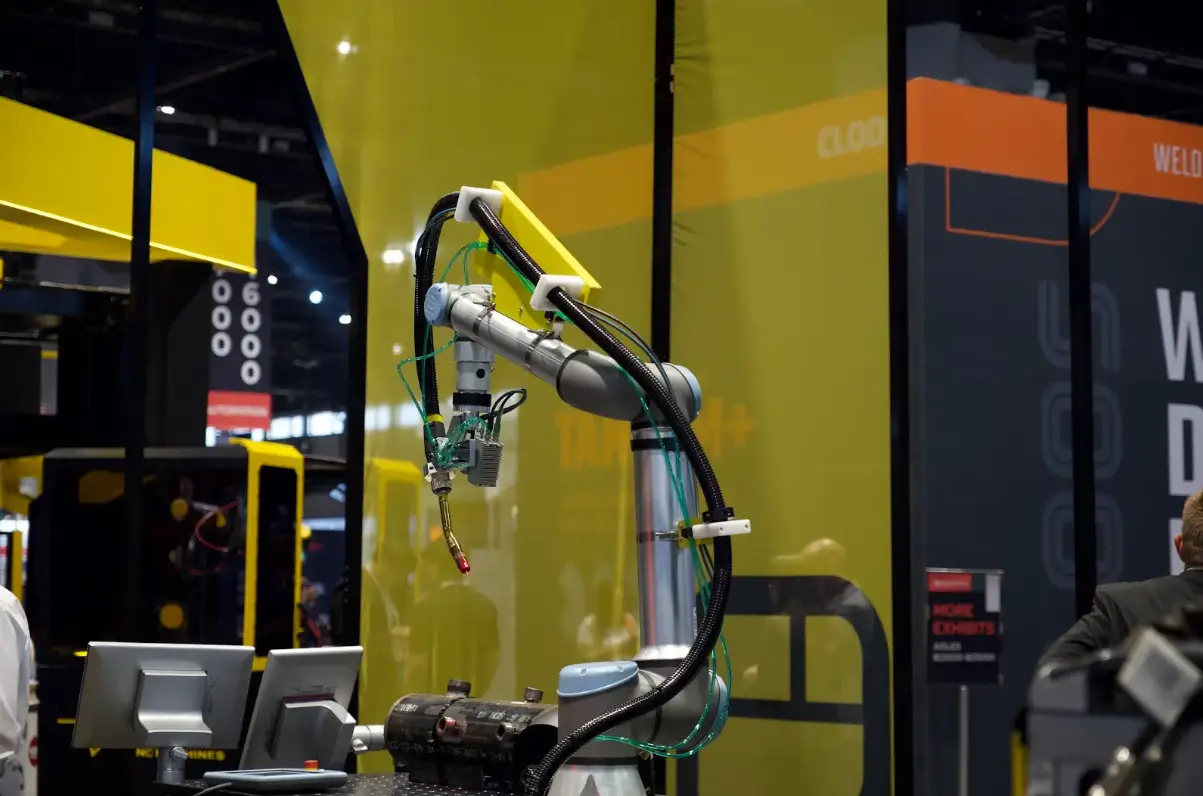
Automated welding has been discussed for decades, but 2025 made one thing clear: the conversation is no longer theoretical. Across manufacturing, fabrication, energy, and industrial production environments, automated welding shifted from a future investment to operational infrastructure.
What changed was not the core technology. Automated welding systems have been capable for years. What changed was how manufacturers approached automation, why they adopted it, and what they expected in return.
Rather than chasing speed or novelty, companies increasingly used automated welding to stabilize production, reduce variability, and protect output in an unpredictable labor and supply environment.
From Speed to Stability
Historically, automated welding was marketed primarily around productivity gains. Faster cycles, higher arc-on time, and reduced manual labor were the primary selling points.
In 2025, the value proposition matured. Manufacturers adopted automated welding to improve consistency and repeatability across shifts, operators, and projects. Weld quality stability became more important than raw throughput.
Labor Constraints Accelerated Adoption Without Defining It
Manufacturers used automated welding to reduce dependence on hard-to-replace skill sets, allow experienced welders to supervise and inspect, shorten training timelines, and stabilize production schedules.
Growth in Orbital and Automated Pipe Welding
Orbital and automated pipe welding adoption increased in energy, process piping, pharmaceutical, and high-spec fabrication industries due to repeatability and documentation requirements.
Buyers Became More Educated and Selective
Manufacturers focused on ROI, integration, service, and scalability rather than features alone.
Over-Automation Still Failed Without Process Discipline
Automation did not fix inconsistent fit-up, material prep issues, or unrealistic expectations.
ROI Became More Realistic
Manufacturers evaluated automation based on reduced rework, improved reliability, and quality consistency.
Support and Service Became Critical
Uptime, service availability, training, and vendor experience became decision drivers.
What 2025 Made Clear
Automation works best when applied intentionally, solving specific problems.
Ready to Elevate Your Automated Welding Capabilities?
If you’re ready to bring more efficiency, consistency, and long-term value to your operation, SEC Automation is here to help. Our automated welding solutions are designed to meet you where you are and take your facility where it needs to go.
Contact our Peachtree Corners, GA, team today at (404) 301-9411 to learn how we can help future-proof your workflow with automation built for real-world performance.
